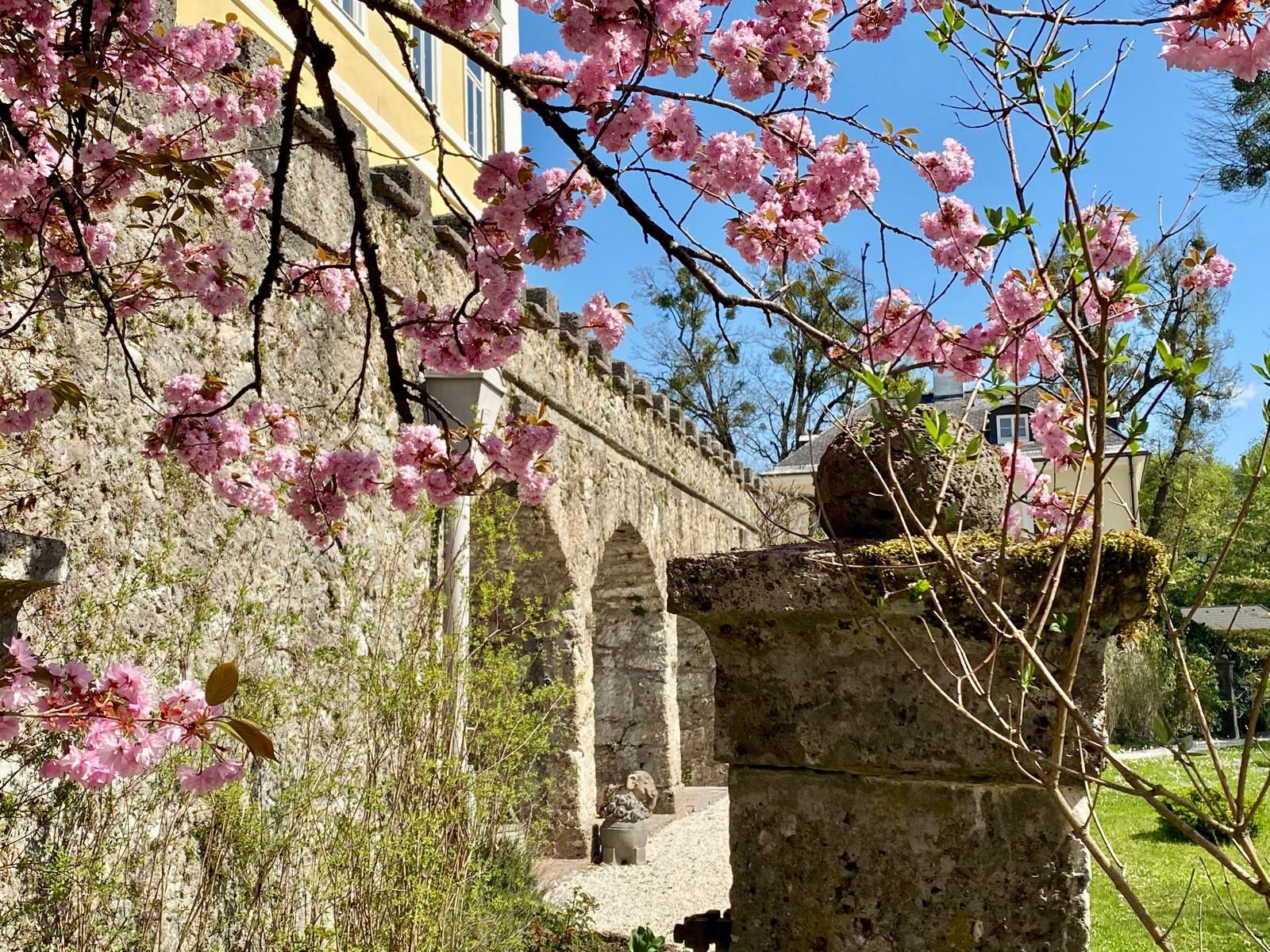
Cherry blossom against the perimeter wall of Schloss Emsburg
II
Provenance

Four centuries, six chapters.

A continuous record of stewardship — from the Markus Sittikus foundation of 1619 through the Rupertiorden and Lamberg chapters to present heritage protection.

Plate i.Perimeter wall, spring
I1619

Markus Sittikus & the Foundation

An estate laid down under the most expansive builder-prince Salzburg would know.

Prince-Archbishop Markus Sittikus von Hohenems (r. 1612–1619) reshaped the southern approach to Salzburg around Hellbrunn, the summer residence and water-theatre he commissioned only a few years earlier.

It is within this same courtly orbit — on the seigneurial avenue that connects the Altstadt to Hellbrunn — that the Emsburg estate is established in 1619, the final year of his reign.
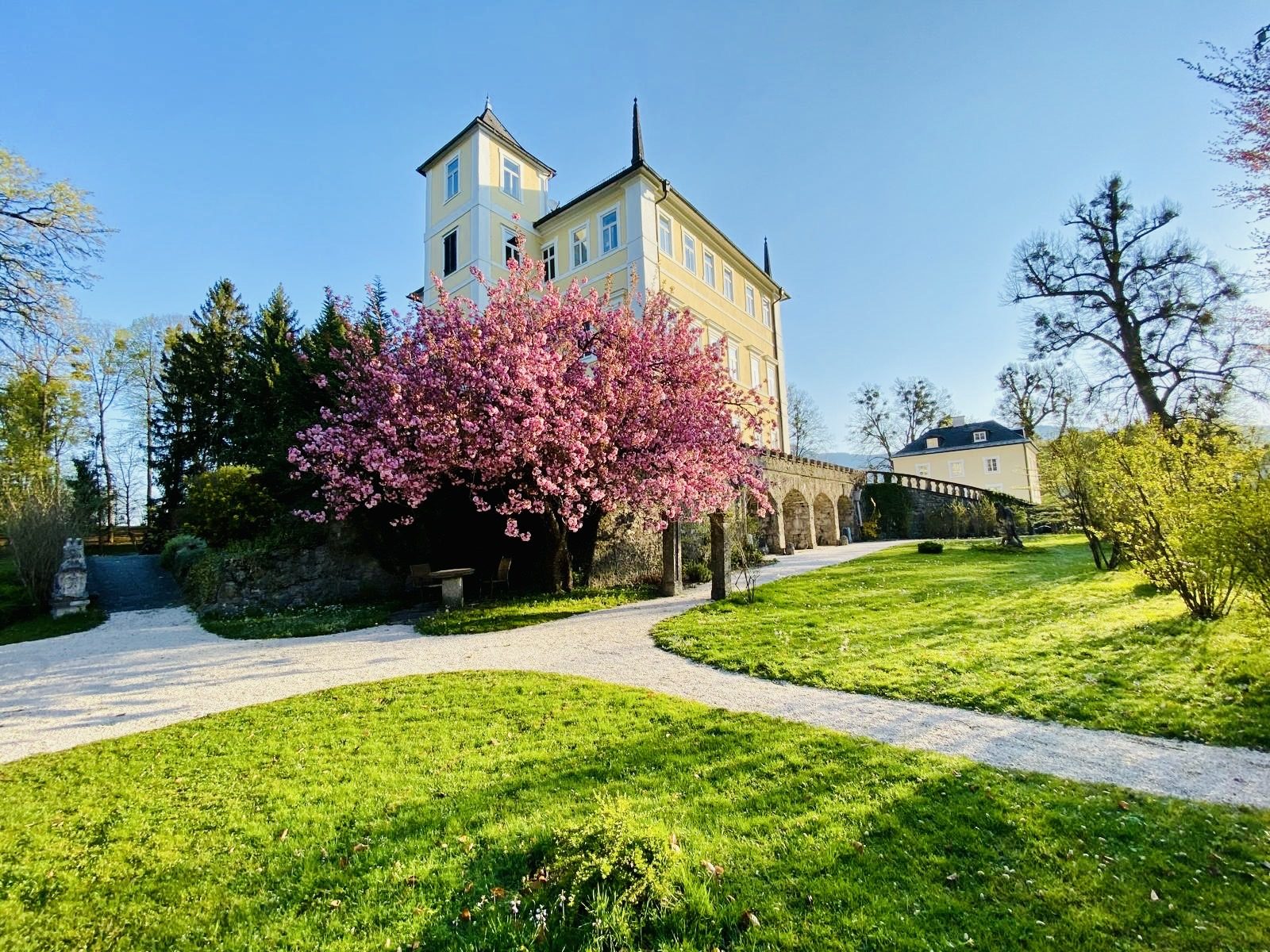
Main residence of Schloss Emsburg with spring cherry
Plate i.Principal facade — spring
II17th c.

Hellbrunner Allee

Central Europe's oldest seigneurial avenue as the estate's permanent address.

Hellbrunner Allee, laid in 1606, is among the oldest planned avenues of its kind in Europe. It was conceived as a ceremonial axis, lined by mature canopy and measured in leagues rather than metres.

Emsburg is one of only a handful of estates that hold presence on this avenue; it remains the only walled private compound of its period and scale still available for private acquisition.

Cherry blossom against the historic stone perimeter wall
Plate ii.Perimeter wall — cherry detail
III17th–18th c.

Rupertiorden · Kreuzhofschloss

Custodianship passes to the Rupertiorden; the estate acquires its Kreuzhofschloss identity.

In the course of the seventeenth and eighteenth centuries the house passes through the Rupertiorden, an order active in the Salzburg court, and is known by the historical name Kreuzhofschloss.

The gallery wing, the cross-shaped landscape figure, and the formal arrangement of ancillary structures all trace back to the disciplined planning of this period.

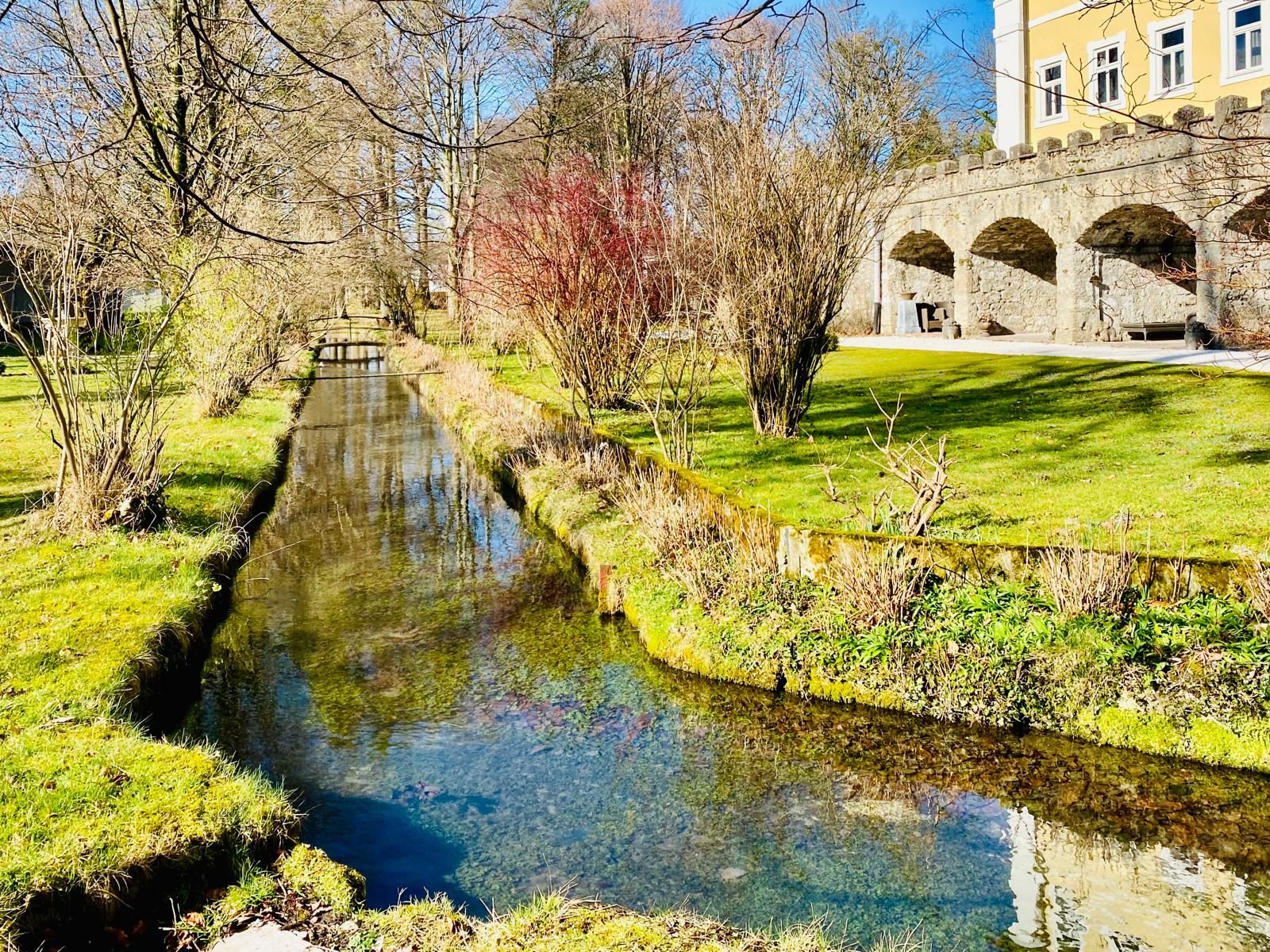
Stream and arcaded wall along the estate
Plate iii.Water and the arcade
IV19th c.

Lamberg & Later Ownership

Aristocratic stewardship of the park, the water regime, and the service buildings.

The nineteenth century stabilises Emsburg as an aristocratic Salzburg residence. The Lamberg line and subsequent owners consolidate the estate's parkland, the formal water system fed from the Alterbach, and the distinct service quarters that remain legible today.

It is in this period that the estate assumes the compositional clarity — avenue, walled park, residence, ancillary houses, stables and orangerie — that is the configuration offered today.

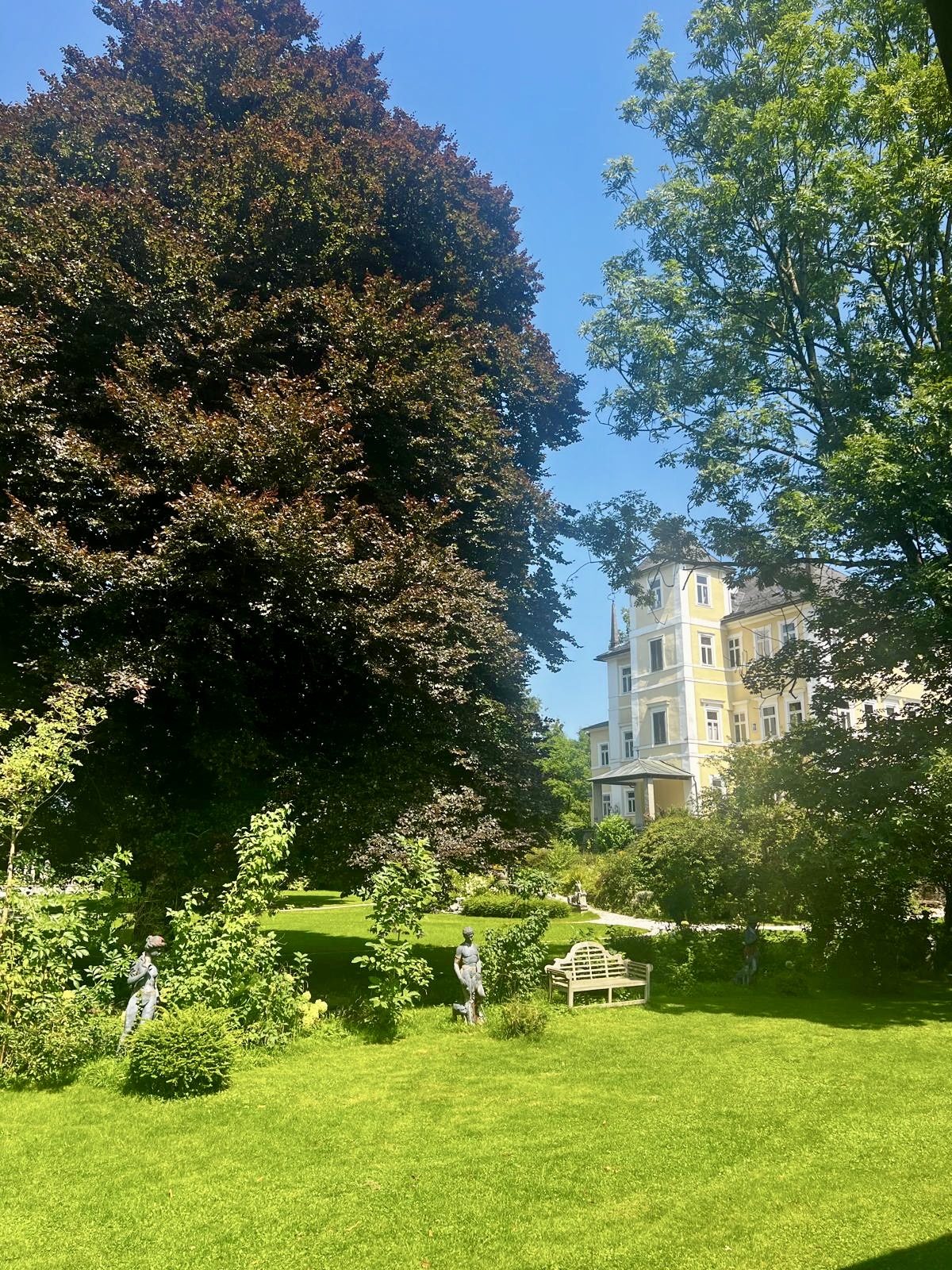
Copper beech and lawn within the estate grounds
Plate iv.Garden interior — copper beech
V20th c.

Franciscan Chapter

A century of religious custodianship leaves chapel, grotto, and interior fabric intact.

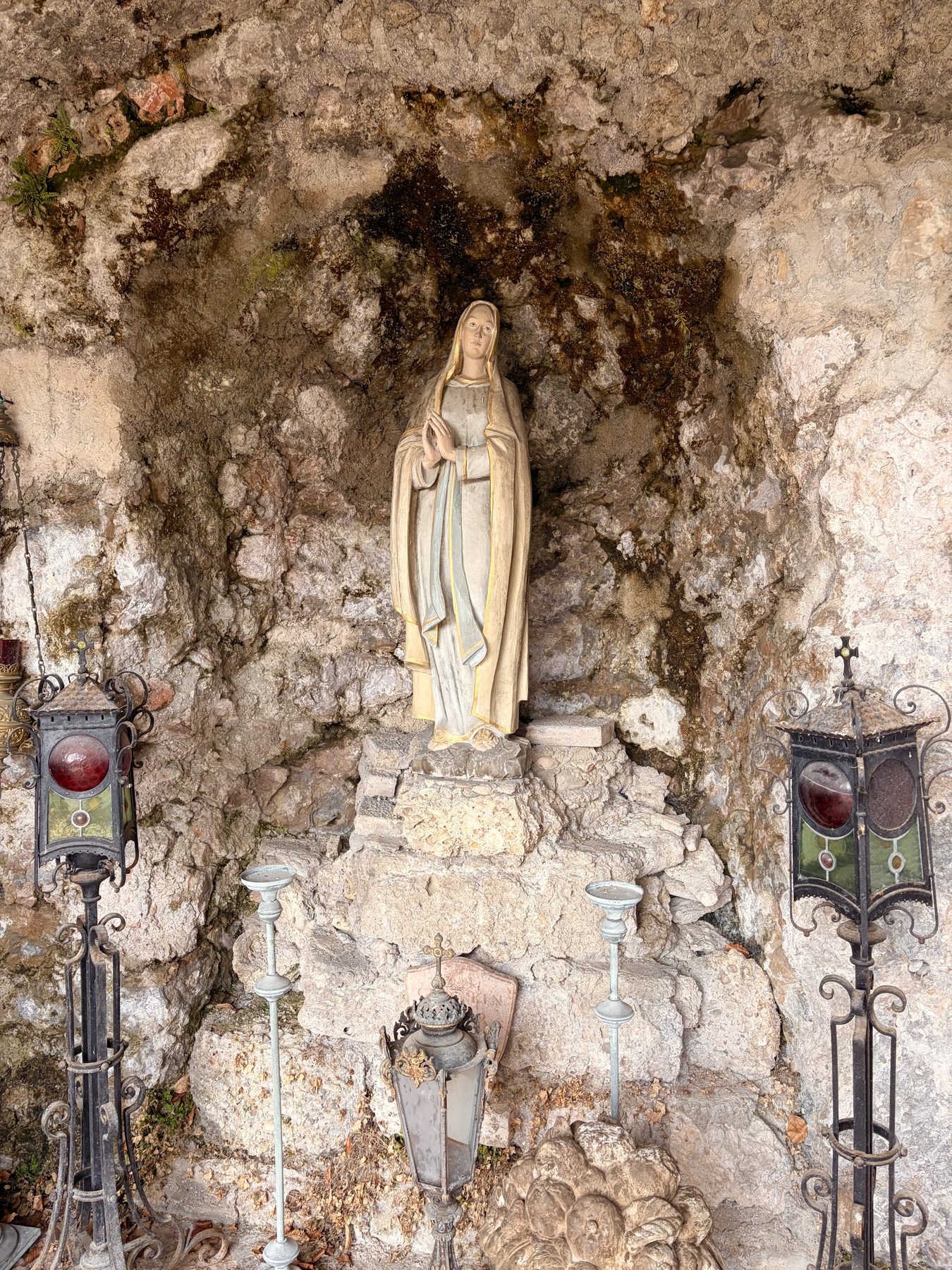
For a significant portion of the twentieth century the estate enters a Franciscan chapter. The presence of chapel, Madonna grotto, and restrained interior programme is the direct legacy of this stewardship.

Because the custodians lived quietly within the estate, the building fabric, the park, and the perimeter walls were preserved rather than modernised — a condition now unusually valuable.

Madonna grotto within the estate
Plate v.Grotto detail — Franciscan chapter
VIToday

Denkmalschutz & Private Stewardship

A listed Austrian monument, held privately, maintained in working order.

Schloss Emsburg is listed under Austrian heritage protection with a formal inventory. The estate sits adjacent to the UNESCO buffer zone of the Salzburg Altstadt (not within it) — a distinction the site takes care not to overclaim.

Restoration is disciplined and ongoing. The estate is held privately, operated as a residence, and offered confidentially to qualified parties.

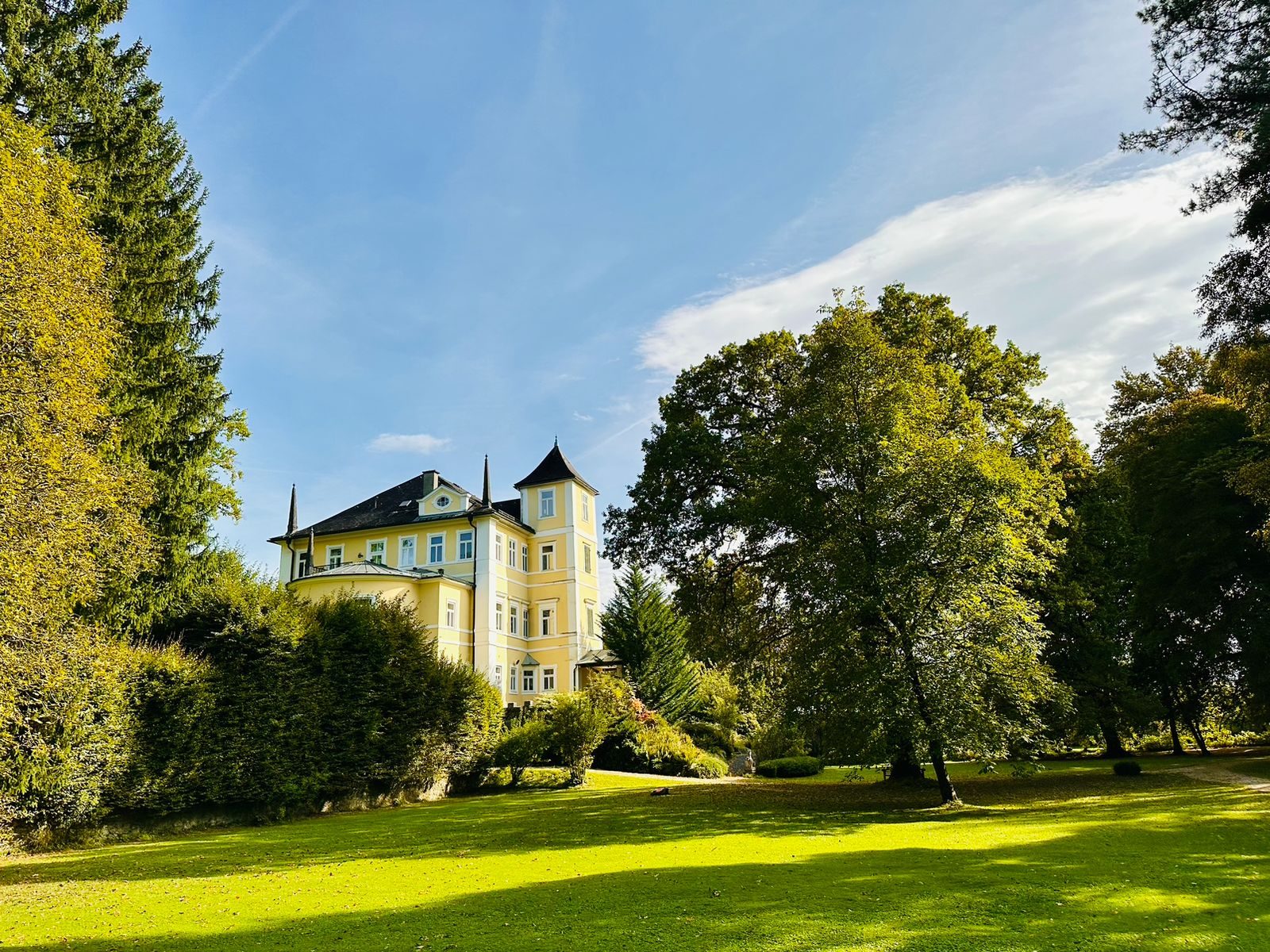
The main residence seen across the lawn
Plate vi.Principal facade — park view
VII
Confidential Enquiry

Confidential materials available on request.

Detailed documentation, private dossier access, and estate viewings are extended only to qualified parties and their advisers. Enquiries are reviewed individually and handled under full confidentiality.